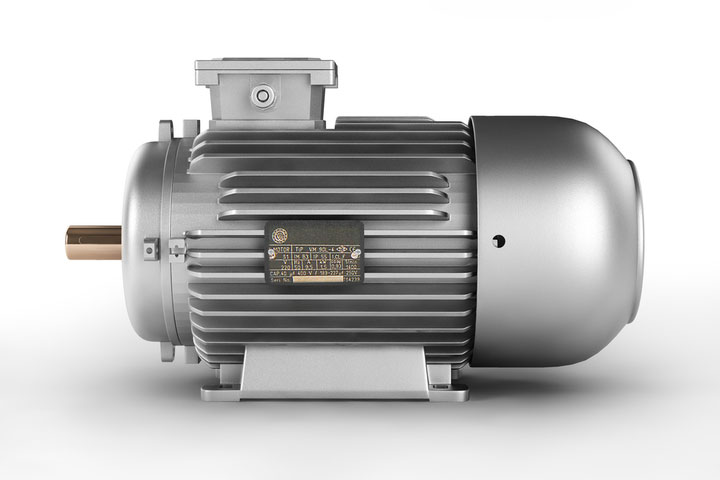
What Is a 3 Phase Motor?
A 3 phase motor is an electric motor that runs on three alternating currents supplied 120 degrees apart. These currents create a continuous rotating magnetic field, which produces smooth torque and makes the motor suitable for continuous industrial operation.
Unlike single-phase motors that deliver power in pulses, a 3 phase motor provides constant power. This is why it is the standard choice for pumps, compressors, conveyors, cranes and most industrial machinery.
How a 3 Phase Motor Works
The working principle can be broken into four clear steps:
- Power enters the stator – Three-phase supply is connected to the stator windings.
- Rotating magnetic field is created – The three currents, 120° apart, produce a rotating magnetic field that travels at synchronous speed.
- Rotor starts turning – The rotating field induces current in the rotor. The interaction creates torque and the rotor begins to turn slightly slower than synchronous speed (this difference is called slip).
- Electrical energy becomes mechanical power – The rotor converts electrical energy into rotational force that drives the connected machine.
| Term | Meaning |
| Stator | Fixed outer part of the motor |
| Rotor | Rotating inner part |
| Rotating Magnetic Field | The force that causes rotation |
| Slip | Difference between synchronous speed and rotor speed |
| Torque | Rotational force that drives the load |
Types of 3 Phase Motors
Two main types are used in industry:
Squirrel Cage Motor – Most common type. Rugged, low maintenance and cost-effective. Ideal for pumps, compressors, conveyors and general industrial machines.
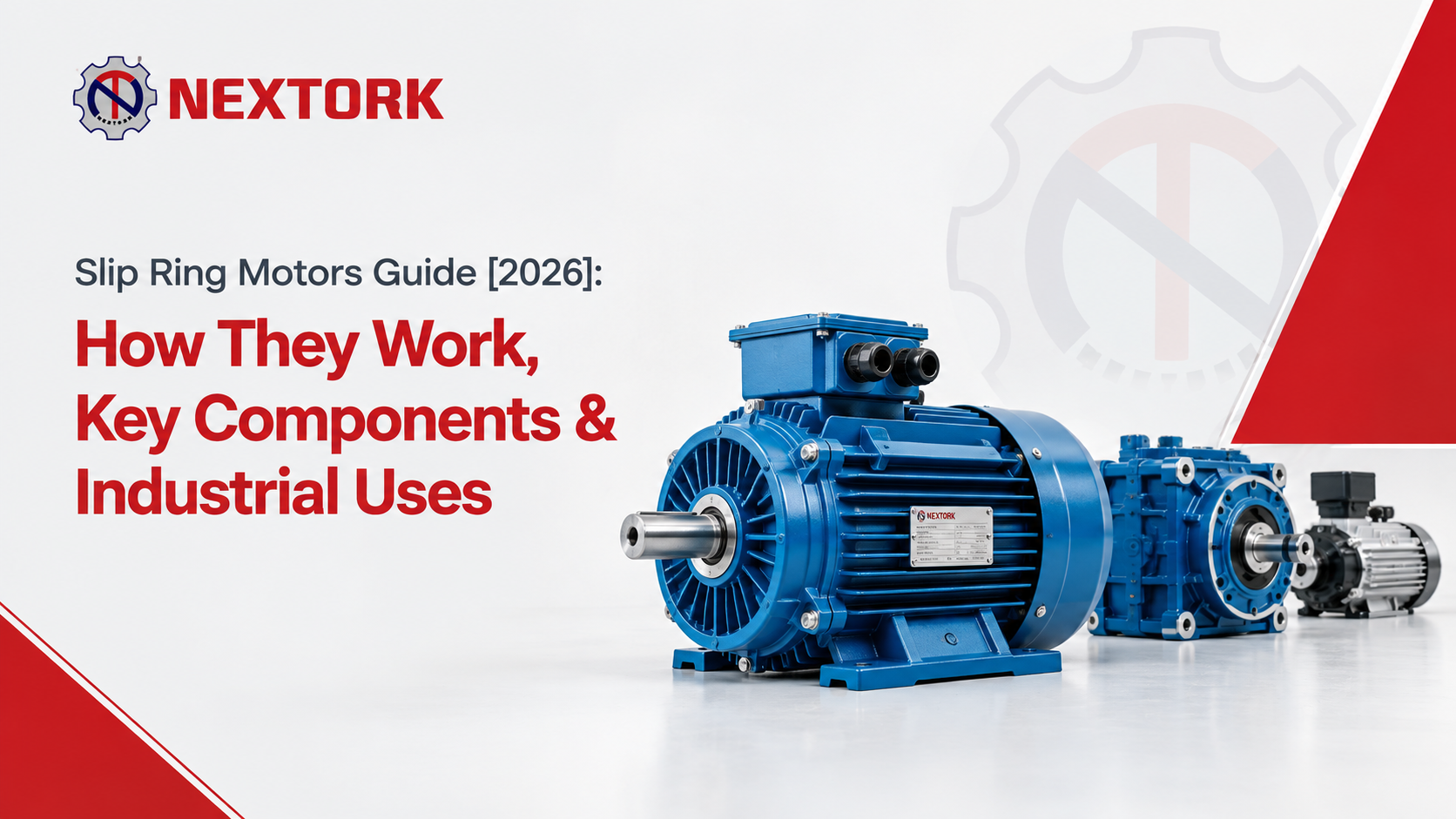
Slip Ring Motor – Designed for high starting torque. Used where the motor must start under heavy load (cranes, hoists, elevators, mining equipment). Higher maintenance than squirrel cage motors.
| Feature | Squirrel Cage | Slip Ring |
| Maintenance | Low | Higher |
| Cost | Lower | Higher |
| Starting Torque | Moderate | High |
| Best For | Most industrial applications | Heavy starting loads |
How to Connect a 3 Phase Motor
Correct connection is critical. Wrong connections are a common cause of overheating and reduced motor life.
There are two primary connection methods:
Star (Y) connection – Used at start-up. Reduces starting current and protects both the motor and the supply.
Delta (Δ) connection – Used during normal running. Delivers full voltage and rated torque.
A Star-Delta starter automatically switches from star to delta once the motor reaches operating speed. This is the standard method for medium and large motors.
For smaller motors (typically up to a few HP), a DOL (Direct-On-Line) starter is often used. It connects the motor directly to the supply without the star-delta transition.
| Method | When to Use | Key Benefit |
| Star-Delta | Medium to large motors | Lower starting current |
| DOL | Smaller motors | Simple and direct connection |
Always check phase sequence, voltage balance and the motor nameplate before connecting.
How to Select the Right 3 Phase Motor
Selection depends on load type, required starting torque, duty cycle and operating environment.
| Application | Typical Motor Type | Notes |
| Pumps, fans, conveyors | Squirrel cage | Most common choice |
| Cranes, hoists, heavy starting | Slip ring or brake motor | High starting torque needed |
| Variable speed applications | Squirrel cage + VFD | Better control and energy saving |
| Outdoor / harsh environments | IP55 or IP66 motor | Protection against dust and water |
Also consider:
- Required power (HP or kW) and speed
- Duty cycle (continuous or intermittent)
- Efficiency class (IE3 or IE4 preferred for energy savings)
- Mounting arrangement and available space
When in doubt, select a motor with a small margin above the minimum requirement rather than operating at the absolute limit.
VFD and Energy Efficiency (Brief)
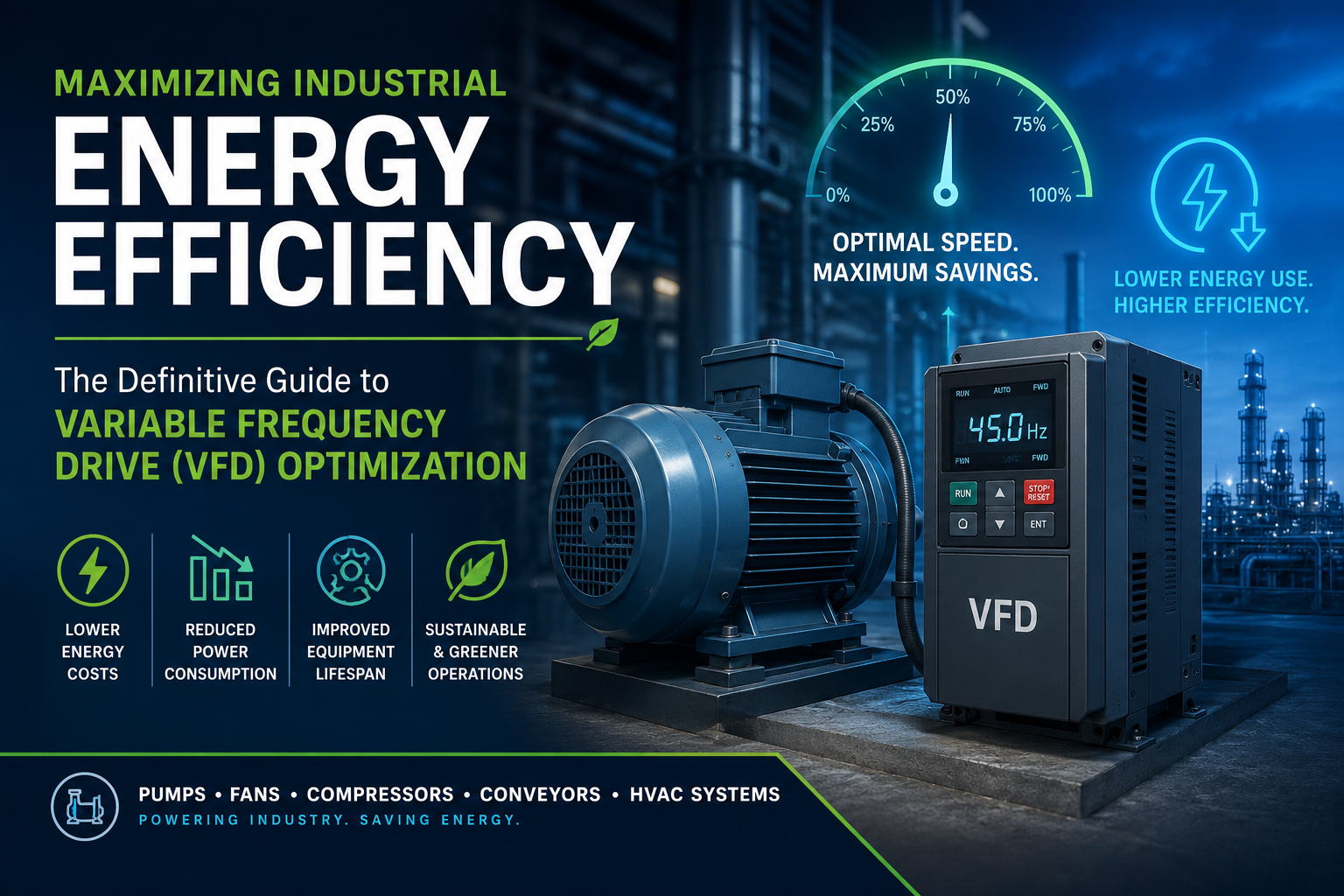
A Variable Frequency Drive (VFD) controls motor speed by changing the supply frequency. It is especially useful for pumps and compressors where load varies, and it reduces energy consumption and mechanical stress.
For efficiency, IE3 (High Efficiency) and IE4 (Premium Efficiency) motors are the preferred standards in modern industrial installations. They consume less electricity over the motor’s lifetime compared with older IE2 designs.
Summary
A 3 phase motor is the backbone of industrial drives because it delivers smooth torque, high efficiency and reliable continuous operation. The two main types are squirrel cage (general purpose) and slip ring (high starting torque). Correct connection (Star-Delta or DOL) and proper selection based on load, duty and environment are essential for long service life and efficient performance.
Frequently Asked Questions
What is a 3 phase motor?
It is an electric motor that runs on three alternating currents 120 degrees apart. These currents create a rotating magnetic field that produces smooth and continuous torque.
How does a 3 phase motor work?
Three-phase power creates a rotating magnetic field in the stator. This field induces current in the rotor, producing torque and causing the rotor to turn slightly below synchronous speed.
What is the difference between squirrel cage and slip ring motors?
Squirrel cage motors are simple, low-maintenance and used for most industrial applications. Slip ring motors provide higher starting torque and are used for heavy starting loads such as cranes and hoists.
When should I use Star-Delta vs DOL?
Use Star-Delta for medium and large motors to reduce starting current. Use DOL for smaller motors where the simple direct connection is acceptable.
Where are 3 phase motors commonly used?
They are used in pumps, compressors, conveyors, cranes, manufacturing machinery, HVAC systems and most continuous industrial applications.