Introduction
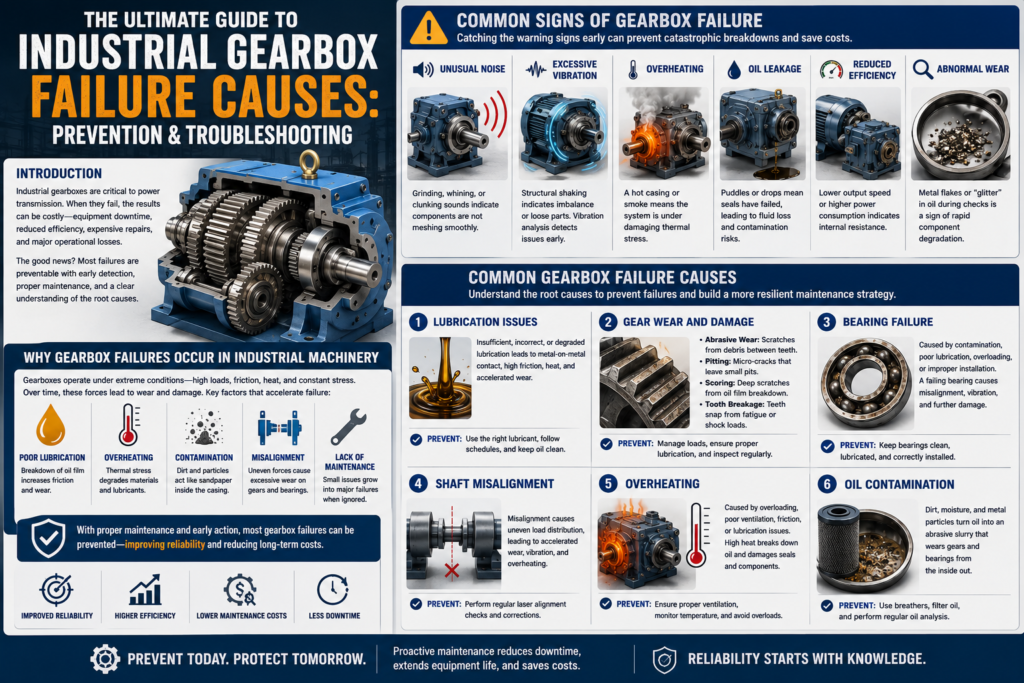
In the world of heavy industry, the industrial gearbox stands as one of the most critical components in machinery and power transmission systems. From manufacturing plants to mining operations, these robust units seamlessly manage torque and speed to keep production lines moving.
However, because they are the workhorses of the factory floor, a breakdown can be catastrophic. Unexpected gearbox failure causes severe operational disruptions, including:
- Costly equipment downtime
- Drastically reduced production efficiency
- Astronomically expensive, unplanned repairs
- Significant overall operational losses
Fortunately, many gearbox issues don’t happen overnight; they develop gradually. Through proper industrial maintenance and early diagnosis, the vast majority of these catastrophic breakdowns can be entirely prevented.
By understanding the root causes behind these failures, industrial facilities can dramatically improve machine reliability and slash long-term maintenance costs.
In this comprehensive guide, we will dive deep into common gearbox failures, their warning signs, underlying causes, troubleshooting methods, and practical prevention strategies to keep your operations running smoothly.
Why Gearbox Failures Occur in Industrial Machinery
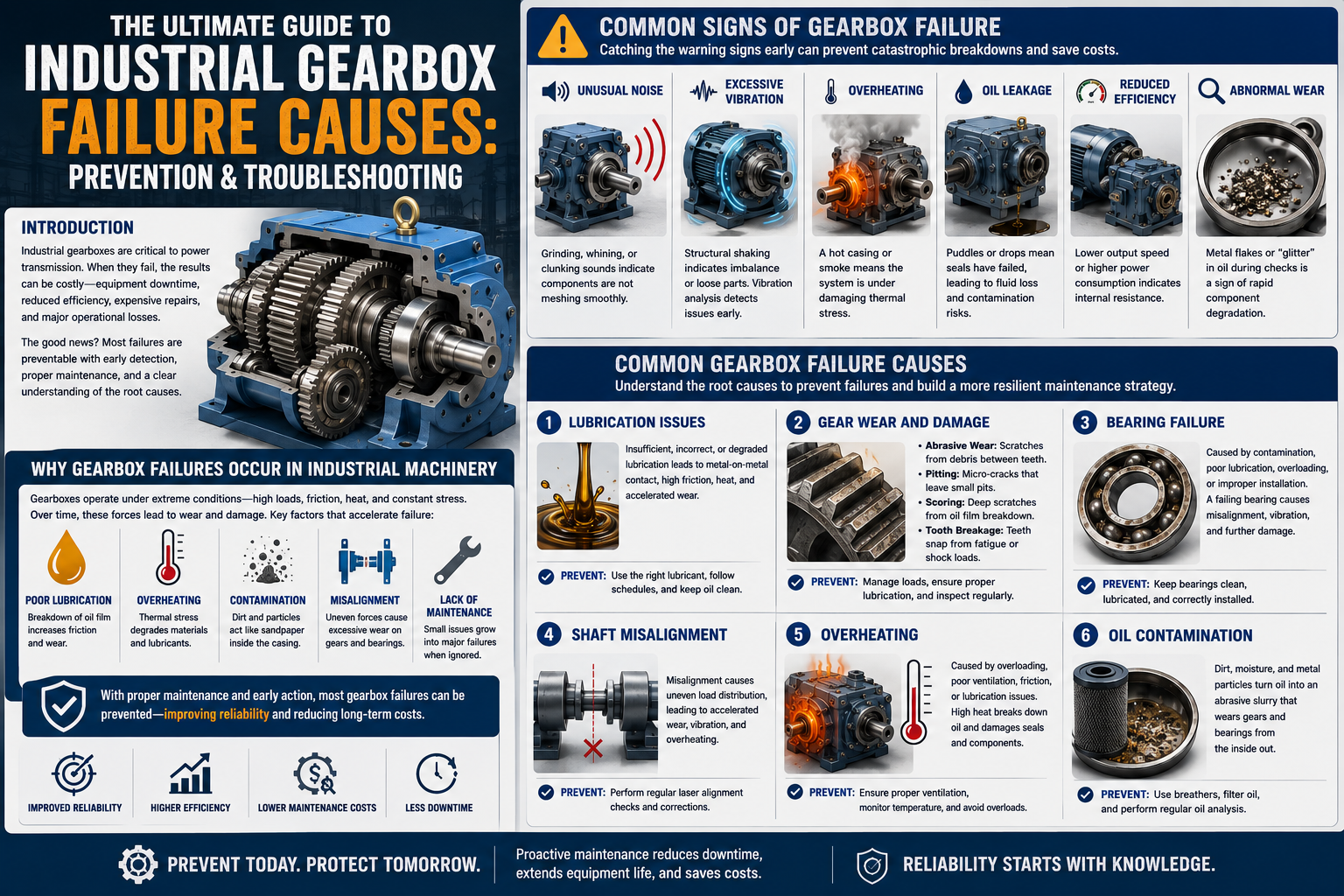
An industrial gearbox failure rarely happens without a reason. By design, these enclosed mechanical systems operate under extreme conditions—frequently enduring incredibly high loads, intense friction, localized heat, and continuous mechanical stress. Over time, these unrelenting forces make the internal components highly vulnerable to wear and physical damage.
Several interconnected factors accelerate this degradation, significantly reducing overall gearbox efficiency and elevating the risk of a total system shutdown:
- Poor Lubrication: The lifeblood of the gears is often compromised.
- Overheating: Thermal stress breaks down materials and lubricants alike.
- Contamination: Particulates act like sandpaper inside the casing.
- Misalignment: Forces are distributed unevenly, punishing specific teeth and bearings.
- Lack of Maintenance: Minor, easily fixable anomalies are left to grow into major mechanical failures.
Despite the harsh environments of industrial machinery, the silver lining is clear: most of these issues are entirely preventable if maintenance teams are trained to identify and act on early warning signs.
Common Signs of Gearbox Failure
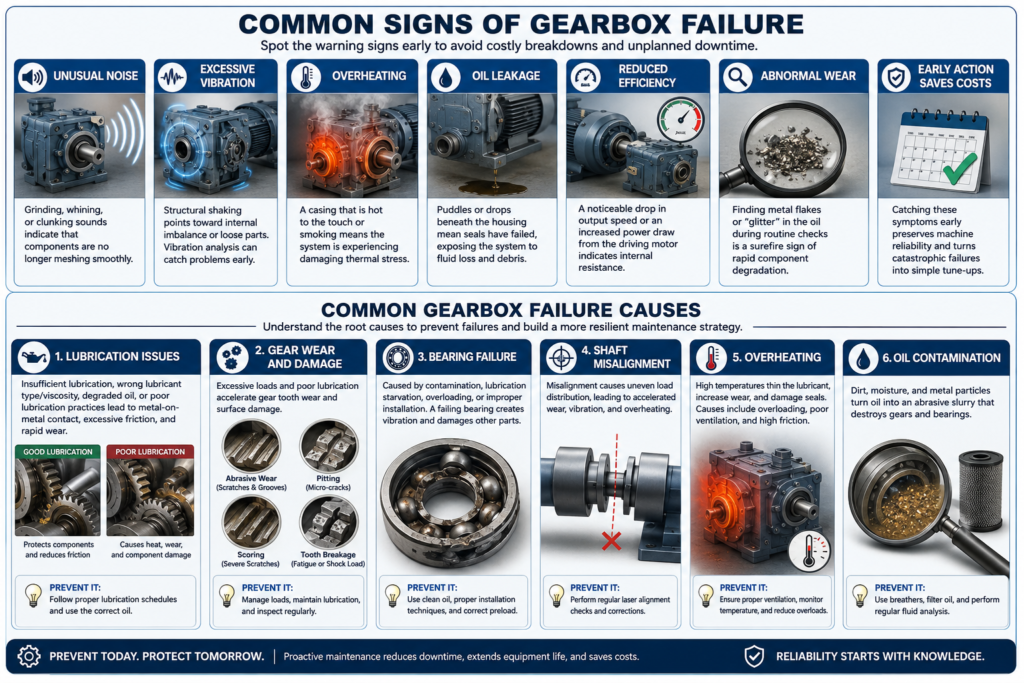
Before a gear snaps or a bearing completely seizes, an industrial gearbox will almost always send out distress signals. Recognizing these early warning signs is vital for preventing major breakdowns and containing repair costs.
Maintenance teams should closely monitor their assets for these common gearbox problems:
- Unusual Noise: Grinding, whining, or clunking sounds indicate that components are no longer meshing smoothly.
- Excessive Vibration: Structural shaking points toward internal imbalance or loose parts. Utilizing vibration analysis can catch these micro-movements long before they are visible to the naked eye.
- Overheating: A casing that is hot to the touch or smoking means the system is experiencing damaging levels of thermal stress.
- Oil Leakage: Puddles or drops beneath the housing mean seals have failed, exposing the system to fluid loss and external debris.
- Reduced Efficiency: A noticeable drop in output speed or an increased power draw from the driving motor indicates internal resistance.
- Abnormal Wear: Finding metal flakes or “glitter” in the oil during routine checks is a surefire sign of rapid component degradation.
Catching these symptoms early preserves machine reliability and transforms what would have been a catastrophic failure into a simple, scheduled tune-up.
Common Gearbox Failure Causes
Understanding the exact gearbox failure causes is the first step toward building a resilient maintenance ecosystem. Below, we break down the primary catalysts behind gearbox degradation, exploring what they are, why they happen, and how to stop them.
Lubrication Issues
Improper lubrication is universally recognized as one of the single most frequent gearbox failure causes. Whether it’s insufficient lubrication (running dry), selecting the wrong lubricant type/viscosity for the load, relying on degraded oil that has lost its chemical properties, or failing to adhere to strict lubrication schedules, the result is the same. Without a consistent, clean film of oil, metal-on-metal friction spikes, generating intense localized heat that rapidly accelerates gear wear and bearing damage. Consistently adhering to proven gearbox maintenance tips is vital to keeping friction at bay.
Gear Wear and Gear Damage
Continuous operation under excessive, unmanaged loads will inevitably cause severe gear tooth wear and surface damage. Over time, this manifests in several distinct stages:
- Abrasive Wear: Scratches and grooves caused by debris trapped between teeth.
- Pitting: Micro-cracks on the tooth surface that eventually break away, leaving small pits.
- Scoring: Severe scratches caused by a total breakdown of the oil film under high temperatures.
- Tooth Breakage: The ultimate mechanical failure where a tooth snaps completely due to fatigue or sudden shock loads.
Conducting rigorous gearbox failure analysis helps identify which type of wear is occurring so you can adjust your load management and inspection intervals accordingly.
Bearing Failure
Bearings hold the rotating shafts in precise alignment. When a bearing failure occurs, it throws the entire internal geometry of the gearbox out of balance, immediately causing severe gearbox vibration problems. Bearings typically fail due to particulate contamination, localized lubrication starvation, severe physical overloading, or improper installation techniques (such as using excessive force during assembly). Once a bearing begins to degrade, its rolling elements rapidly deform, creating a destructive domino effect throughout the housing.
Shaft Misalignment
During installation or after prolonged operation, the driving shaft and the gearbox input shaft can fall out of perfect alignment. This shaft misalignment creates uneven load distribution, forcing specific components to bear burdens they weren’t designed to handle. This mistake accelerates component wear, creates massive structural vibrations, and causes localized overheating. Regular gearbox troubleshooting must include precision laser alignment checks to ensure the system is perfectly square.
Overheating
When internal temperatures skyrocket, it directly reduces the lubricant’s effectiveness by thinning it out, leading to accelerated component damage. Gearbox overheating causes include chronic mechanical overloading, poor ambient ventilation around the unit, underlying lubrication issues, and excessive internal friction. Monitoring overheating is crucial, as sustained high temperatures will bake oil seals, making them brittle and prone to catastrophic leaking.
Oil Contamination
Airborne dirt, ambient moisture, and microscopic metal particles from normal wear routinely find their way into gearbox housings. Left unchecked, this oil contamination turns an otherwise clean lubricant into a highly abrasive slurry that actively destroys gears and bearings from the inside out. Implementing strict preventive maintenance—such as high-quality desiccant breathers, routine oil filtration cycles, and regular laboratory fluid analysis—is essential to catch and remove contaminants before they cause permanent damage.
Gearbox Noise and Vibration Problems
Abnormal noise and physical vibrations are rarely just nuisances; they are the earliest structural indicators of an impending mechanical failure.
When components begin to shift or wear down, they create distinct sonic and physical signatures:
- Grinding or Whining Sounds: Typically signify severe gear tooth wear, poor meshing, or a complete lack of lubrication.
- Knocking Noises: Often indicate a broken gear tooth or a severely damaged bearing ball passing through the mechanism.
- Excessive Vibration & Irregular Movement: Point directly to imbalances, loose mounting bolts, or severe shaft misalignment.
To diagnose these hidden mechanical issues before they lead to a complete structural breakdown, modern facilities rely heavily on advanced vibration analysis. By reading the frequency waves of the machine, technicians can perform a precise root cause analysis, pinpointing exactly which gear or bearing is misbehaving without even opening the gearbox casing. Dealing with gearbox vibration problems and gearbox noise causes early saves thousands in emergency repairs.
Gearbox Failure Analysis and Troubleshooting
When a gearbox acts up or fails unexpectedly, simply swapping out parts isn’t enough. Teams must conduct a formal gearbox failure analysis to understand why the component failed, preventing the exact same breakdown from happening again down the road.
Effective gearbox troubleshooting relies on a blend of diagnostic methods:
- Vibration Monitoring: Tracking changes in oscillation frequencies to detect unbalance, misalignment, or bearing wear.
- Oil Analysis: Testing used oil in a lab to check for chemical degradation, moisture levels, and the presence of wear metals.
- Thermal Inspection: Utilizing infrared cameras to locate localized hot spots caused by friction or failing bearings.
- Alignment Checks: Using precision laser alignment tools to verify that shafts are perfectly trued.
- Visual Inspection: Utilizing borescopes to visually examine gear teeth for pitting, scoring, or cracking.
By combining these methods into a robust program of predictive maintenance, you can easily identify the root cause of an anomaly, plan your gearbox repair during scheduled downtime, and keep minor issues from escalating.
How to Prevent Gearbox Failures
The goal of any reliability engineer is to stop failures before they start. Implementing a few practical, proactive prevention strategies can dramatically extend the life of your equipment.
Follow a Preventive Maintenance Schedule
Do not wait for the machine to stop working before you service it. Implement a strict preventive maintenance cadence that dictates daily visual checks, monthly oil level verifications, and comprehensive annual system overhauls. Keep a highly detailed maintenance checklist for every asset so that no task—such as tightening structural mounting bolts or inspecting seals—is ever overlooked.
Use Proper Lubrication Practices
Lubrication is the single most important variable in extending gearbox efficiency. Ensure your team is selecting the exact lubricant specified by the original equipment manufacturer (OEM) for your specific operating temperatures and loads. Monitor the oil’s condition closely, and establish strict, data-driven lubrication intervals to ensure the system never runs dry or on degraded fluids, eliminating preventable lubrication issues.
Monitor Temperature and Vibration
Incorporate continuous or frequent predictive monitoring into your plant floor workflow. By tracking temperatures and analyzing vibrations through predictive maintenance and vibration analysis, you gain a real-time window into the machine’s internal health. This allows you to catch faults months in advance, scheduling minor repairs long before they cause catastrophic equipment downtime.
Perform Regular Alignment Checks
Whenever a gearbox is moved, serviced, or subjected to a heavy shock load, verify its positioning. Regular alignment checks using precision tools correct minor shaft misalignment issues early. Keeping the system perfectly balanced drastically improves industrial maintenance efficiency, lowers power consumption, and eliminates uneven component wear.
Importance of Preventive Maintenance for Industrial Gearboxes
Investing time and capital into a comprehensive preventive maintenance program for your industrial gearbox inventory isn’t an unnecessary operational expense—it is a major cost-saving strategy.
Proactive maintenance yields massive operational dividends:
- Extended Equipment Lifespan: Gearboxes that are kept clean, aligned, and properly lubricated routinely last twice as long as poorly maintained counterparts.
- Optimized Operational Efficiency: Well-maintained gears turn smoothly, drawing less electrical power and maximizing throughput.
- Enhanced Machine Reliability: Production managers can hit quotas confidently, knowing their machinery won’t unexpectedly fail mid-shift.
- Production Continuity: Eliminating unexpected equipment downtime keeps supply chains moving and protects downstream revenue.
Ultimately, executing minor, planned maintenance tasks on a predictable schedule is infinitely more cost-effective than funding an emergency, late-night gearbox repair or buying an entirely new replacement unit under duress.
Final Thoughts
At their core, industrial gearbox failure causes are entirely predictable. They stem from a known list of mechanical stressors: poor maintenance habits, lubrication issues, excessive overheating, aggressive oil contamination, and unaddressed shaft alignment problems.
By shifting your plant’s operational mindset away from reactive “break-fix” habits and toward proactive asset management, your business can significantly reduce unexpected downtime and costly emergency repairs. Implementing regular visual inspections, leveraging advanced predictive maintenance tools, and executing swift, data-driven troubleshooting will keep your industrial gearbox fleet operating at peak efficiency for years to come.
Prioritize your machinery’s health today, protect your bottom line tomorrow, and partner with reliability specialists like Nextork to optimize your industrial maintenance strategies.
FAQ Section
1. What are the most common gearbox failure causes?
The vast majority of gearbox failure causes trace back to improper lubrication practices, severe oil contamination, shaft misalignment, chronic overheating, and operating under unmanaged mechanical overloads. These issues present themselves as common gearbox problems like gear tooth wear, broken teeth, and seized bearings.
2. How can industries prevent gearbox failures?
Industries can prevent failures by adopting a robust preventive maintenance strategy. This includes using the correct OEM-specified lubricants, adhering to a comprehensive gearbox maintenance tips checklist, monitoring heat/vibration levels, and performing routine laser alignment checks.
3. What causes gearbox overheating?
Gearbox overheating causes include insufficient or completely degraded lubricants, severe internal component friction, chronic mechanical overloading, poor ambient ventilation around the unit housing, and failed internal bearings. Sustained overheating will rapidly degrade internal oil seals, leading to fluid leaks.
4. Why do gearboxes produce excessive vibration?
Excessive vibration is usually an indicator of structural or mechanical imbalance. The most common drivers behind gearbox vibration problems are severe shaft misalignment, worn or failing internal bearings, loose structural mounting bolts, or damaged/broken gear teeth. Utilizing professional vibration analysis can pinpoint the exact cause.
5. How is gearbox failure analysis performed?
Engineers perform gearbox failure analysis by combining data from multiple diagnostic streams. This includes executing a root cause analysis via oil analysis (checking for wear metals), vibration monitoring, infrared thermography, and visual inspection of internal gear teeth using specialized borescopes.
6. What are the signs of gearbox damage?
The most obvious signs of internal gear damage include loud grinding or clunking noises, sudden structural vibrations, unexpected spikes in casing temperature, dark or metal-flake-contaminated oil, and visible oil leaks beneath the unit. If you spot these signs, immediate gearbox troubleshooting is required to prevent a total breakdown.