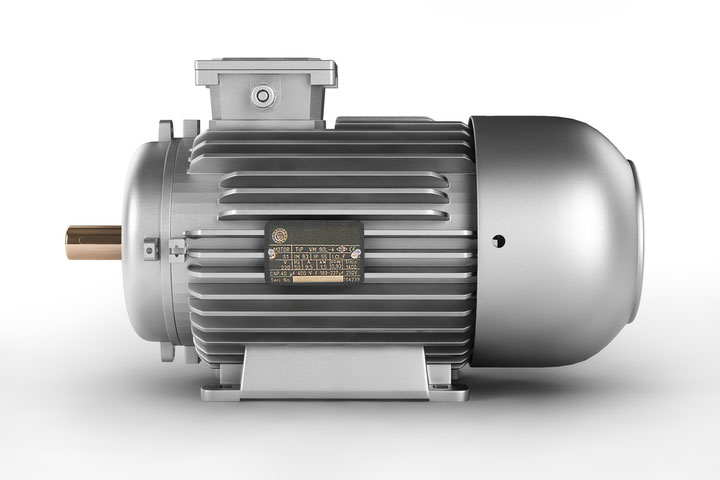
What Is a 3 Phase Motor?
If you work in or around industry, you’ve almost certainly come across a 3 phase motor even if you didn’t know that’s what it was called.
Simply put, a 3 phase motor is an electric motor that runs on three alternating electrical currents supplied together in sequence. These three currents work one after the other, continuously, to create smooth and constant rotation inside the motor.
Here’s an easy way to picture it. Imagine three people pushing a large wheel- one after another, without stopping. Because the pushing never pauses, the wheel keeps turning smoothly, without any jerks or interruptions. That’s exactly how a 3 phase motor works.
Compare that to a single phase motor, which delivers power in pulses – starting and stopping in a rhythm. For light loads, that’s fine. But for heavy industrial use, you need something that runs continuously, reliably, and efficiently. That’s where the 3 phase motor becomes the obvious choice.
Why Industries Prefer 3 Phase Motors
The reason factories, pumps, compressors, and conveyor systems almost universally run on 3 phase motors comes down to a few things- higher efficiency, lower electricity consumption, longer lifespan, and the ability to handle heavy loads without strain. They’re built for continuous operation, and they deliver consistent torque performance that single phase motors simply can’t match at scale.
How a 3 Phase Motor Works?
Understanding the working principle of a 3 phase motor is simpler than it sounds. Here’s what happens, step by step.
Step 1: Power Goes Into the Stator
The stator is the fixed outer part of the motor. When three-phase electrical supply is connected to the stator winding, the motor receives its electrical energy and the process begins.
Step 2: A Rotating Magnetic Field Is Created
Because the three currents are 120 degrees apart from each other, they automatically generate what’s called a Rotating Magnetic Field- an invisible force that moves at a speed known as synchronous speed. This is the core of how the motor works.
Step 3: The Rotor Starts Turning
Inside the motor sits the rotor. As the rotating magnetic field passes across the rotor conductors, it induces current. In a squirrel cage rotor, the most common type that induced current interacts with the magnetic field and produces torque. The rotor begins to rotate, moving slightly slower than synchronous speed. That difference between the two speeds is called slip.
Step 4: Electrical Energy Becomes Mechanical Power
As the rotor turns, the motor converts electrical energy into mechanical energy. That mechanical energy is what drives industrial pumps, compressors, conveyors, and heavy-duty cranes.
Think of it like a ceiling fan, the moment electricity is supplied, rotation begins. The 3 phase motor works on the same principle, just at a much greater scale and with far more power.
| Term | What It Means |
| Stator | Fixed outer part of the motor |
| Rotor | Rotating inner part |
| Rotating Magnetic Field | The invisible force that causes rotation |
| Slip | Difference between rotor speed and synchronous speed |
| Torque | Rotational force that drives machinery |
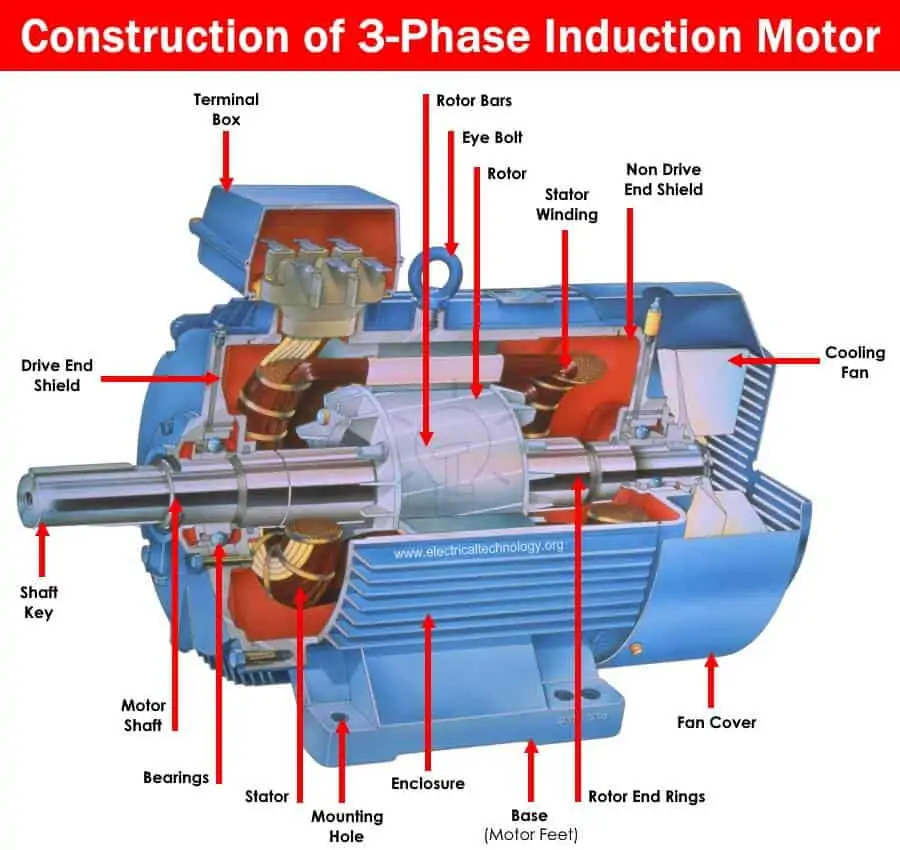
Main Components of a 3 Phase Motor
Knowing what’s inside a motor helps with both selection and troubleshooting whether you’re an engineer specifying equipment or a procurement manager trying to understand what you’re buying.
The four core components are the stator, which creates the magnetic field and forms the stationary outer body; the rotor, which rotates and produces motion; the terminal box, which is where the power supply connects; and the air gap, the carefully calculated space between stator and rotor that allows smooth magnetic rotation and reduces vibration.
Beyond these, key internal features include the squirrel cage rotor, end rings, laminations that reduce energy losses, Class F insulation that protects the windings, and IP55 or IP66 protection ratings for dust and water resistance. A properly designed air gap is more important than most people realise, it directly affects how stable and vibration-free the motor runs.
Types of 3 Phase Motors
There are two main types used across industry, and the right one depends entirely on what you’re running.
Squirrel Cage Motor: This is the most common 3 phase motor in industrial use. It’s rugged, low maintenance, cost-effective, and highly reliable. You’ll find it running pumps, compressors, conveyors, and most standard manufacturing equipment. For most applications, this is the default choice.
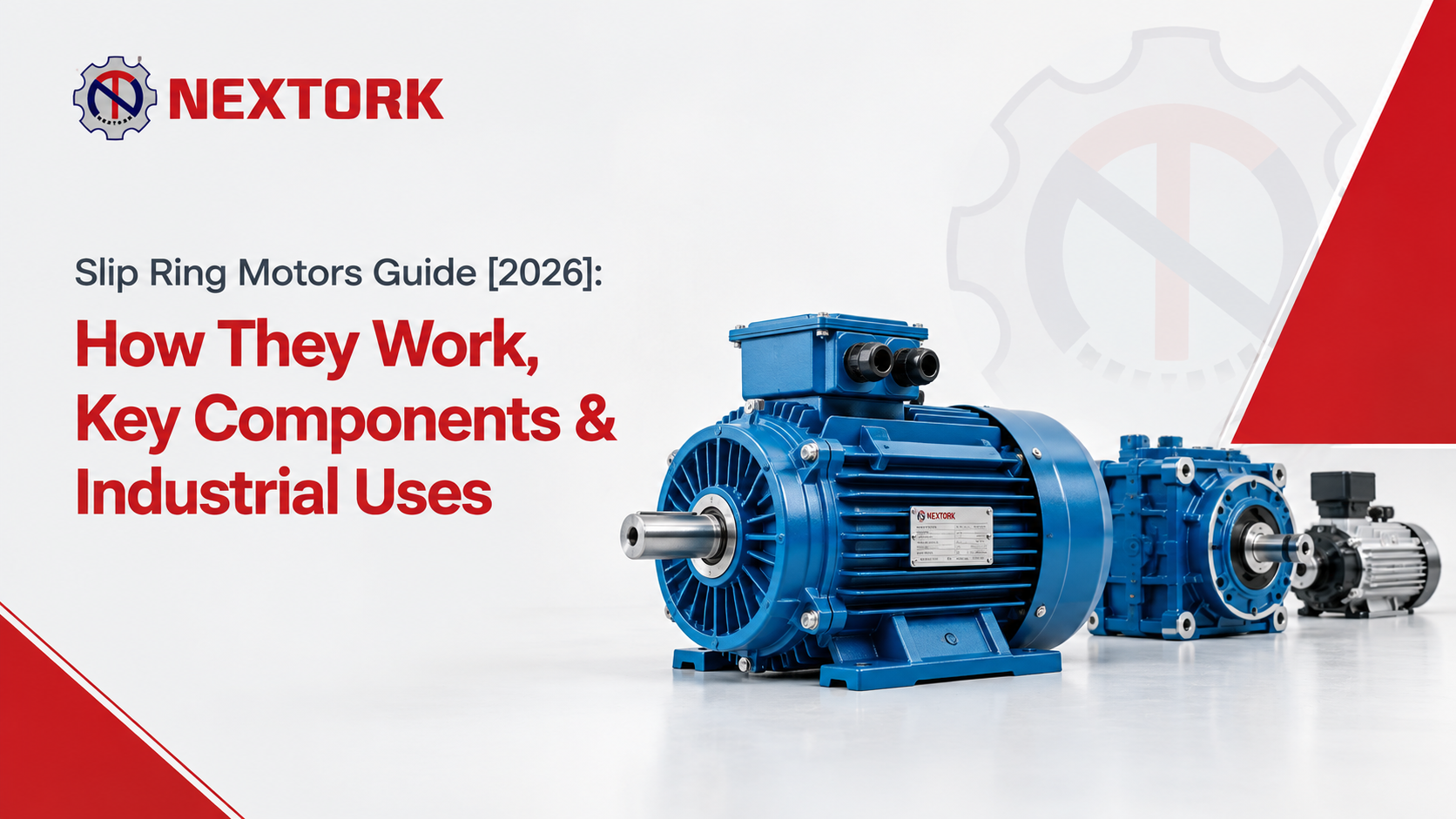
Slip Ring Motor: Where the squirrel cage motor handles standard loads well, the slip ring motor is designed for heavy-duty starting situations like cranes, elevators, mining machinery. It delivers high starting torque, which makes it the right choice when loads are heavy from the moment the motor starts. The trade-off is higher maintenance and cost.
| Feature | Squirrel Cage Motor | Slip Ring Motor |
| Maintenance | Low | Higher |
| Cost | Lower | Higher |
| Starting Torque | Moderate | High |
| Best For | Most industrial applications | Heavy load starting |
For energy optimisation across either type, IE3 energy efficient motors are increasingly the preferred specification.
How to Connect a 3 Phase Motor
Connection happens inside the terminal box, and getting it right matters — incorrect connections are one of the most common causes of 3 phase motor overheating.
There are two primary connection types.
Star connection is used during startup. It reduces the starting current, which protects both the motor and the supply during the initial load. Delta connection is used during normal running, it delivers full power and rated torque once the motor is up to speed.
A Star-Delta Starter automates this switch, moving from star to delta automatically as the motor reaches operating speed. It’s the standard solution for medium to large motors.
For smaller capacity motors, a 1 hp or 3 hp 3 phase motor, for example a DOL Starter (Direct On Line) is more appropriate. It connects the motor directly to supply voltage without the star-delta transition.
When connecting, always pay attention to phase sequence, voltage imbalance, service factor, and slip frequency. These aren’t just technical checkboxes, they directly affect how long your motor lasts.
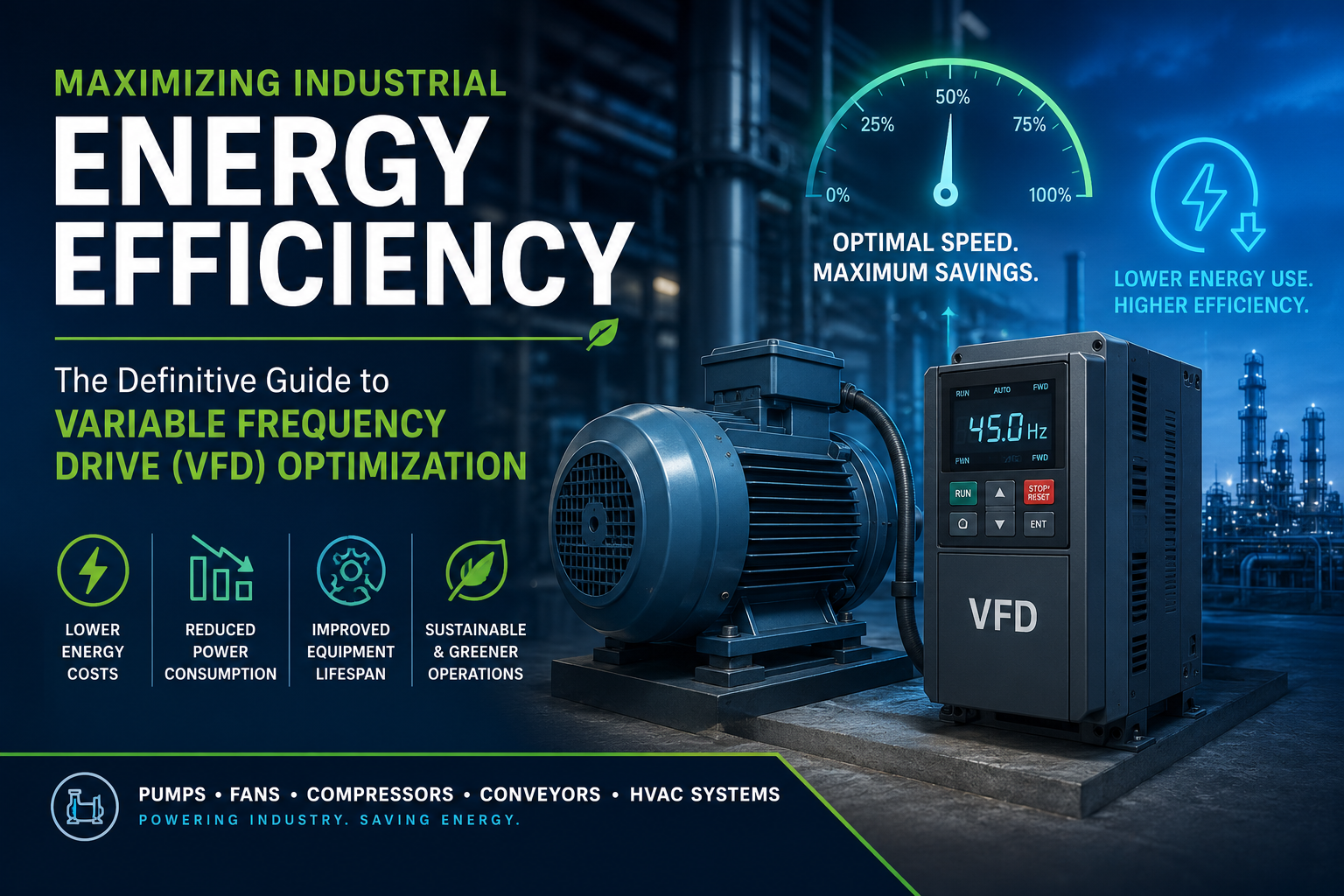
The Role of a VFD in a 3 Phase Motor
A VFD (Variable Frequency Drive) is one of the most practical upgrades you can add to a 3 phase motor setup.
Instead of running at full speed constantly, a VFD adjusts the frequency and voltage supplied to the motor, which means the motor only works as hard as the application actually requires. For pumps and compressors especially, this makes a significant difference to energy consumption.
The benefits are straightforward: lower electricity bills, better power factor, controlled torque, reduced wear, longer motor lifespan, and smoother acceleration that reduces mechanical stress at startup. For any operation where load demands vary, a VFD pays for itself over time.
How to Select the Right 3 Phase Motor
Motor selection comes down to three things: the load type, the torque requirement, and the environment the motor will operate in.
Here’s a general guide based on application and power requirement:
| Application | Recommended Motor Power |
| Small machines | 1 HP |
| Water pumps | 3 HP |
| Compressors | 5 HP |
| Industrial machines | 7.5 HP |
| Heavy machinery | 10 HP |
Beyond power rating, the selection should account for starting torque requirement, duty cycle, environmental conditions, and the appropriate IP protection rating. For outdoor or harsh environments, IP55 or IP66 rated motors are essential. For energy efficiency, IE3 or IE4 class motors are the right specification for any modern industrial setup.
Getting selection wrong costs money, either through inefficiency, premature failure, or both. When in doubt, always specify slightly above your minimum requirement.
Where 3 Phase Motors Are Used
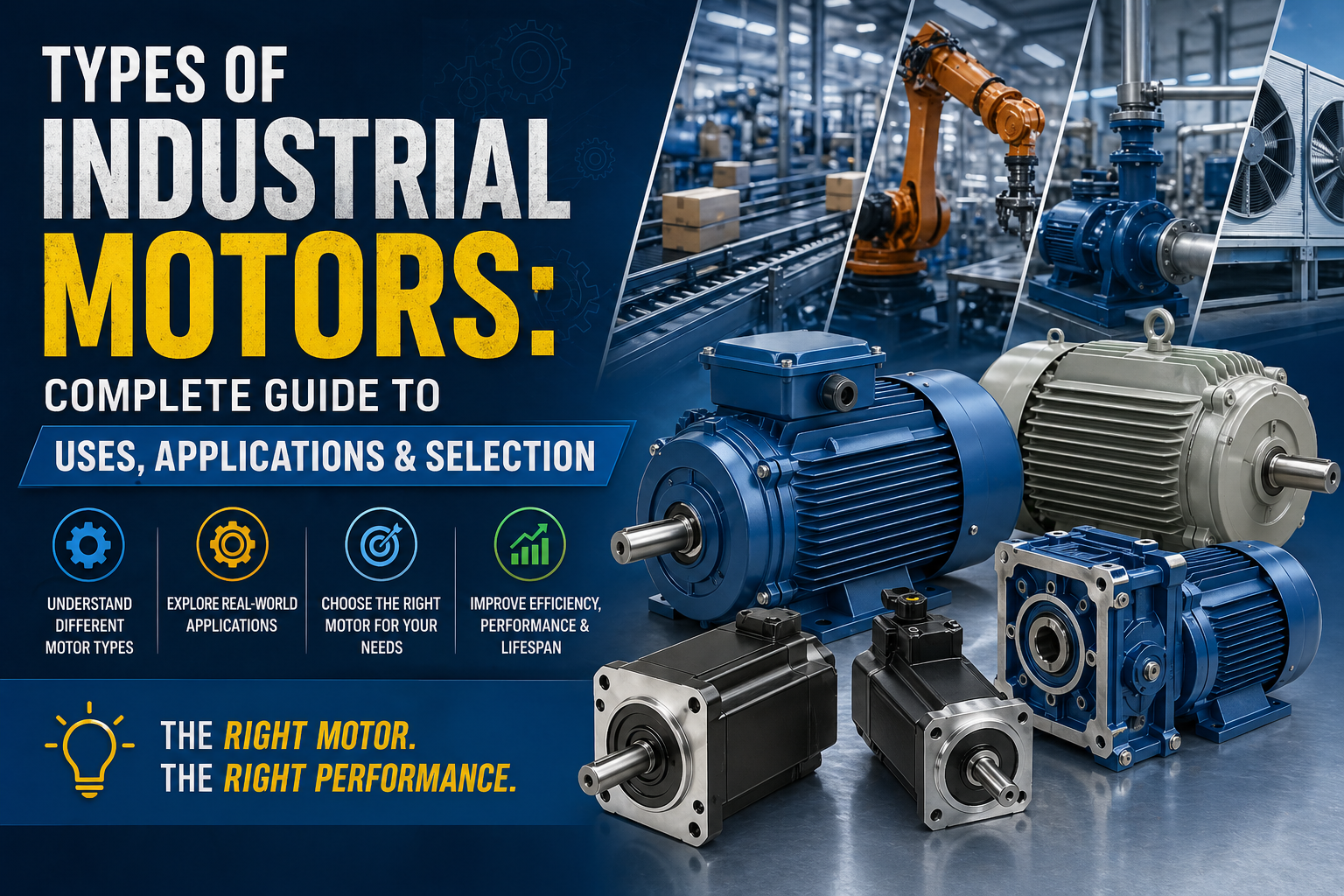
The applications are wide ranging. Industrial pumps, compressor motors, conveyor systems, manufacturing equipment, HVAC systems, heavy-duty cranes, and gearbox integration systems all rely on 3 phase motors as their primary drive source.
Because of their high torque output and stable operating speed, 3 phase motors are genuinely the backbone of industrial automation. Most of what moves, pumps, compresses, or lifts in a modern factory is powered by one.
Energy Efficiency Standards: IE3 and IE4 Motors
Energy efficiency has moved from a nice-to-have to a procurement requirement in most industrial environments and for good reason. The difference between an IE2 and an IE3 motor adds up significantly over the lifetime of the equipment.
IE3 motors deliver high efficiency with meaningfully lower electricity consumption than standard IE2 motors. IE4 motors go further, providing premium efficiency that reduces both operational cost and carbon footprint. For industries with sustainability targets or high runtime hours, IE4 is increasingly the right specification.
| Efficiency Class | Level | Benefit |
| IE2 | Standard | Basic performance |
| IE3 | High Efficiency | Lower electricity usage |
| IE4 | Premium Efficiency | Maximum energy savings |
In Summary
A 3 phase motor is the most widely used motor in industrial applications and for good reason. It delivers smooth operation, reliable torque, high efficiency, and a long service life under heavy load conditions.
Whether you’re specifying a motor for a new installation, replacing aging equipment, or trying to reduce energy costs through better efficiency ratings & understanding the basics covered in this guide gives you the foundation to make the right decision.
For industrial transmission solutions that need to perform consistently and last, motor selection, connection, and efficiency class all matter. Get those right, and the rest takes care of itself.
FAQs
What is a 3 phase motor?
A 3 phase motor is an electric motor that operates using three alternating electrical currents supplied together in sequence. These currents create a rotating magnetic field, which drives smooth and efficient motor operation.
How does a 3 phase motor work?
Three phase current is supplied to the stator winding, generating a rotating magnetic field. This field interacts with the rotor, producing torque and converting electrical energy into mechanical motion.
What is the difference between a single phase and a 3 phase motor?
Single phase motors use one electrical phase and suit lighter loads. 3 phase motors use three phases, delivering higher efficiency, smoother operation, and the power output needed for industrial applications.
Where are 3 phase motors used?
They’re used across industrial pumps, compressor motors, conveyor systems, manufacturing equipment, HVAC systems, and heavy-duty machinery.
What is a VFD in a 3 phase motor?
A Variable Frequency Drive controls motor speed by adjusting supply frequency and voltage. It improves energy efficiency, reduces wear, and extends motor lifespan, particularly valuable in applications where load demand varies.