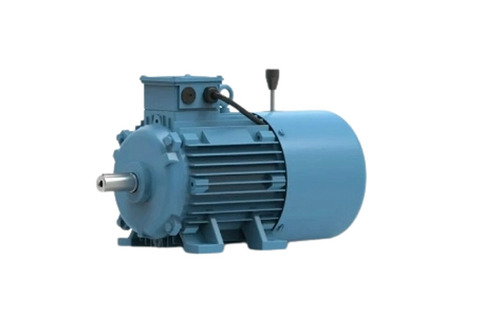
Crane Duty Motors: Types, Applications & Performance Benefits Explained
A crane duty motor is a purpose-built AC induction motor engineered to deliver high starting torque and withstand constant starting, stopping, and reversing — the demands of EOT cranes, hoists, and other material handling equipment that standard motors simply aren’t built for.
When it comes to industrial material handling, the reliability of lifting and hoisting equipment is non-negotiable. Designed specifically for the intense, intermittent nature of lifting operations, these heavy duty crane motors are critical components in ensuring safe, efficient, and continuous productivity across foundries, ports, construction sites, and steel plants — differentiating themselves from conventional motors through their unique design and torque characteristics.
What Are Crane Duty Motors?
A crane duty motor is a specialized type of AC induction motor meticulously engineered to handle the unique stresses inherent in applications like hoisting, trolley travel, and long travel drives in cranes and winches. Their defining characteristic is the ability to deliver an exceptionally high starting torque instantly, which is necessary to overcome the inertia of a heavy static load.
Unlike general purpose motors, which are designed for continuous running at a constant load, crane motors operate under severe, intermittent service. This involves frequent starting, stopping, reversing, and speed changes, often while carrying heavy loads. To manage this relentless stress, they feature a rugged construction with highly durable components, enhanced insulation, and superior thermal capacity — the core difference between a crane duty and a standard motor. Standard motors would quickly overheat and fail when subjected to the rapid cycling and high torque demands characteristic of EOT crane applications. Crane duty motors are specifically built to prevent overheating and ensure reliable long-term performance under these demanding conditions.
Types of Crane Duty Motors
The optimal choice of a crane duty motor depends heavily on the specific application, required control level, and load handling dynamics. Nextork, a trusted name among crane duty motor suppliers in India with a strong presence in Mumbai, offers three primary types tailored for various material handling systems — browse our crane duty motor catalog for full specifications.
Crane Duty Brake Motor
The crane duty brake motor integrates a motor and a heavy-duty electromagnetic or mechanical brake into a single compact unit. This design is crucial for hoisting and lifting applications where immediate and secure stopping of the load is paramount for both safety and precision. When power is cut, the brake engages instantly. These are commonly available as squirrel cage types and are favored for their simplified control, reliability, and low maintenance requirement, especially in standard hoists and smaller cranes.
Crane Duty Slip Ring Motor
The crane duty slip ring motor offers superior starting and speed control compared to its squirrel cage counterpart. The key advantage lies in the ability to connect external resistors to the rotor circuit via slip rings. This mechanism allows the motor to achieve extremely high starting torque (often two to three times the rated torque) while limiting the starting current, which is critical for smooth acceleration of massive loads. They are highly preferred for very large cranes, gantry cranes, and applications demanding fine speed adjustments.
Squirrel Cage Crane Duty Motor
The squirrel cage crane duty motor is the workhorse of the crane industry, valued for its simplicity, rugged construction, and low maintenance needs. While they don’t offer the smooth, infinitely variable speed control of slip ring motors, modern designs — often coupled with VFD (Variable Frequency Drive) technology — allow them to manage high torque and frequent start-stop applications effectively. These are excellent choices for trolley and long travel drives, where dependability and simplicity matter more than fine speed control.
Duty Cycles and Performance Ratings Explained (S1–S5)
The most significant factor distinguishing an industrial motor is its duty cycle, which defines the time and load pattern the motor is designed to withstand without dangerous overheating. This concept is vital for the thermal capacity and longevity of crane duty motors. IEC 60034-1 — the international standard published by the International Electrotechnical Commission — defines ten duty types, denoted S1 through S10.
For cranes and material handling equipment, the most relevant intermittent duty cycles are:
- S3 (Intermittent Periodic Duty): A sequence of identical cycles, each including a period of constant-load operation and a period of rest. Starting current has little effect on temperature rise.
- S4 (Intermittent Periodic Duty with Starting): Similar to S3, but starting current is significant and must be accounted for in the temperature rise calculation. This is highly common for hoist drives.
- S5 (Intermittent Periodic Duty with Electric Braking): Like S4, but also includes rapid stopping via electric braking (counter-current or regenerative).
| IEC Duty Cycle | Description | Typical Application |
|---|---|---|
| S1 | Continuous Duty | Standard, constant-load machinery |
| S3 | Intermittent Periodic Duty | Light crane drives, small hoists |
| S4 | Intermittent with Starting | Hoist drives, frequent start-stop |
Motor thermal capacity is managed using high-grade materials. Insulation class F or H is standard for crane duty motors. Class F insulation allows motor windings to withstand a temperature rise of 105°C over a 40°C ambient, while Class H provides an even higher thermal limit — ensuring the motor safely handles the heat generated during peak loading of S3/S4 duty cycles.
Applications of Crane Duty Motors
- EOT crane applications: Used for all three motions — hoisting (lifting), cross travel (trolley), and long travel (gantry movement) — in overhead cranes governed by international safety frameworks such as OSHA’s standard for overhead and gantry cranes.
- Hoists and winches: Providing powerful, controlled lifting motion for electric hoist drive systems in construction and manufacturing.
- Foundries and steel plants: Operating under harsh, high-temperature, dusty environments to transport molten metal, billets, and finished products.
- Construction and port cranes: Enabling the heavy, intermittent lifting required for container handling and high-rise construction.
- Material handling systems: Including conveyors, transfer cars, and automated storage and retrieval systems.
- Mining equipment: Used in lifting and dragging systems where heavy duty crane motors are essential.
Key Features & Advantages of Crane Duty Motors
- Exceptional High Starting Torque: Engineered torque-speed characteristics ensure the load starts moving instantly and smoothly from a standstill, preventing jerks and component strain.
- Designed for Frequent Start-Stop Applications: Windings and bearings are built to endure the mechanical and thermal shock of continuous on-off cycling.
- Rugged Construction and Housing: High-strength cast iron frames — often IP54 or higher protection — withstand vibration, dust, moisture, and mechanical stress.
- Superior Thermal Management: Enhanced cooling mechanisms and Class F/H insulation prevent overheating even under prolonged intermittent duty.
- High Efficiency Ratings: Nextork sources modern designs meeting IE3 efficiency standard requirements — lower energy consumption and reduced operational costs over the motor’s lifespan.
- Specialized Braking Systems: Integration with robust electromagnetic or hydraulic brakes for precise, safe load positioning.
How to Select the Right Crane Duty Motor
- Load Characteristics and Duty Cycle: Determine the exact weight and required acceleration/deceleration to define the duty cycle (e.g., S3, S4) the motor must meet.
- Power and Torque Specification: Calculate the motor’s power rating (kW/HP) based on required speed and maximum load — almost all industrial cranes run on a three-phase crane duty motor.
- Braking Requirement: Decide between a standard motor with an external brake, or a complete crane duty brake motor unit, ensuring brake torque exceeds motor torque.
- Environment and Protection: Consider the operating environment (dusty, wet, high heat) to specify the correct IP rating and insulation class (F or H).
The best way to ensure the perfect match is to consult our crane duty motor catalog or engage directly with Nextork’s engineering team.
Maintenance & Best Practices
- Periodic Inspection: Regularly check mounting bolts, coupling, and wiring for looseness or damage from vibration.
- Lubrication: Follow manufacturer guidelines strictly for bearing lubrication — over- or under-lubrication drastically shortens bearing life.
- Insulation Checks: Periodically test winding insulation with a megohmmeter to catch failures before they occur.
- Overheating Prevention: Keep cooling fins clean and unobstructed, especially on motors used in frequent start-stop applications.
- Brake Servicing (for Brake Motors): Regularly inspect brake lining, air gap, and functionality to ensure reliable stopping under full load.
Why Choose Nextork for Crane Duty Motors?
When the safety of your personnel and the efficiency of your operations depend on your lifting machinery, choosing a proven crane duty motor supplier is essential. Nextork stands out as one of the leading crane duty motor suppliers in Mumbai and across India, specializing in mechanical and electrical transmission solutions.
We specialize in sourcing and supplying highly reliable three-phase crane duty motors built for maximum endurance. Our motors comply with international standards, feature high-efficiency designs, and offer robust construction — whether you need a simple squirrel cage crane duty motor or a complex crane duty slip ring motor system.
Conclusion
Crane duty motors are the unsung heroes of heavy industry, providing the controlled power necessary for safe and efficient material handling. By selecting the correct type — whether a crane duty brake motor for precision stopping or a crane duty slip ring motor for superior speed control — and adhering to proper maintenance protocols, industries can ensure uninterrupted productivity.
Ready to power your heavy lifting operations with reliable, high-performance motors? Discover the full range of Nextork’s certified solutions.
Frequently Asked Questions (FAQs)
1. What are Crane Duty Motors used for?
Crane duty motors are designed for material handling equipment such as EOT cranes, hoists, winches, and lifts. They withstand frequent start-stop operations and high torque requirements, making them ideal for heavy-duty industrial applications like foundries, steel plants, and construction sites.
2. What is the difference between a Crane Duty Motor and a Standard Motor?
Unlike standard motors that run continuously (S1 duty), crane duty motors are built for intermittent operations (S3 or S4 duty cycles). They deliver high starting torque, resist overheating, and are more durable under load variations — better suited to cranes, hoists, and lifting equipment, whereas standard motors are built for uniform loads.
3. What are the main types of Crane Duty Motors?
The primary types are Crane Duty Brake Motors, Crane Duty Slip Ring Motors, and Squirrel Cage Crane Duty Motors. Brake motors ensure quick, safe stopping during hoist operations. Slip ring motors allow smooth starting and torque control. Squirrel cage motors are ideal for low-maintenance, rugged use.
4. How do I select the right Crane Duty Motor for my application?
Consider load type, duty cycle (S1–S5), braking needs, and power rating. It’s also essential to check insulation class (F or H), mounting type, and starting torque requirements. For accurate selection, review the Nextork crane duty motor catalog or consult our experts.
5. How often should Crane Duty Motors be maintained?
Inspect bearings, insulation, and braking mechanisms periodically, especially if the motor operates in dusty or high-temperature environments. Check for mechanical wear and implement overheating-prevention measures to keep the motor efficient and reliable.